Creature Feature – Decorator Crab
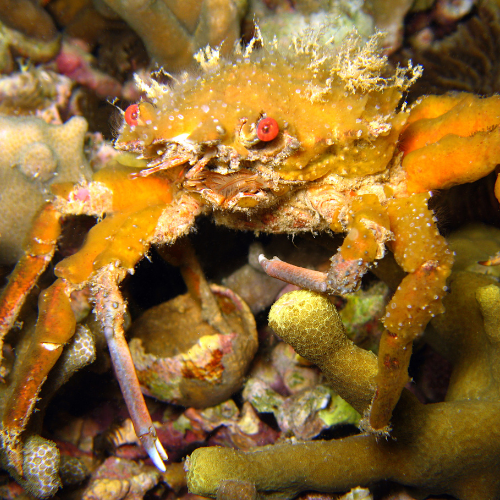
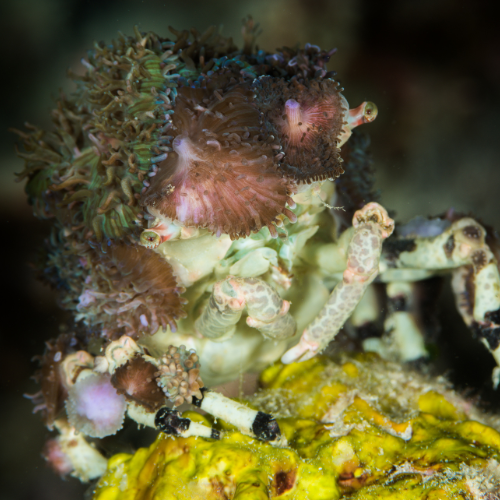
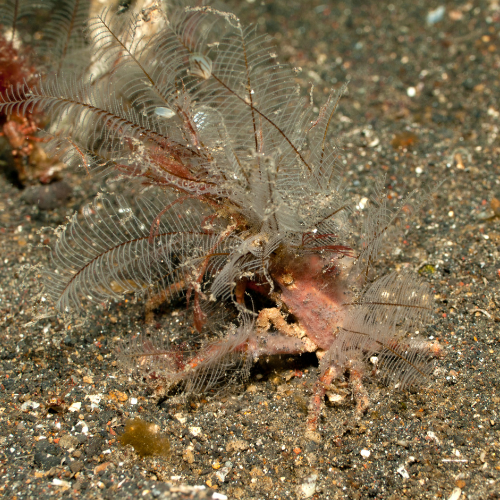
Don’t be fooled — it’s not a moving seaweed, but a decorator crab!
These fascinating creatures are known for camouflaging themselves with tiny pieces of algae and animals such as anemones, sponges, and bryozoans. This camouflage serves both as a defence mechanism against predators and as a way to blend into their environment.
The decorator crab is covered with tiny, hooked, Velcro-like bristles called setae, to which it attaches algae and small animals.
Decorator crabs are a diverse group of species which belong to the ‘spider crab’ family, Majidae, including the largest crab in the world, the Giant Japanese Spider Crab, with a leg span of over 2 metres.
Taxonomy
Kingdom: Animalia
Phylum: Anthropoda
Order: Decapoda
Super Family: Majoidea
Decorator Crab Fact File
 Size: Up to 13 cm
Distribution: Found globally in warm regions, especially in kelp forests and coral reefs
Diet: Algae, sponges, small crustaceans, bryozoans
Behaviour: Decorator crabs use natural materials as camouflage, making them difficult to spot in their surroundings. During the moulting process, they “recycle” their living decorations by removing anemones, sponges, and other items from their old shell and attaching them to their new one
IUCN Status: Not listed