Creature Feature – Marine Iguana
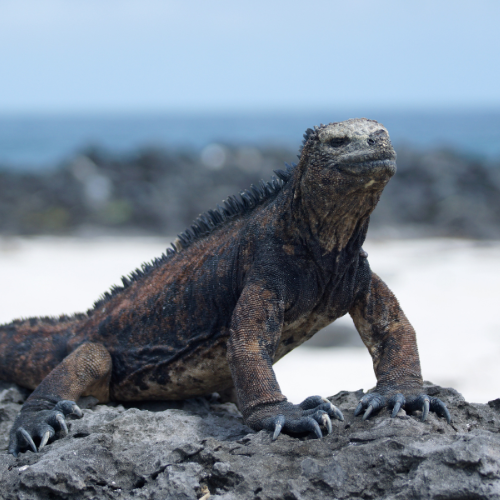
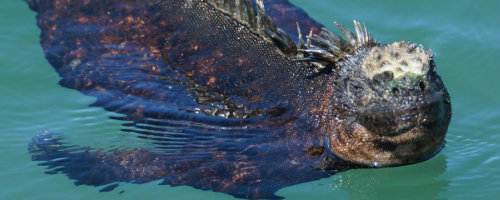
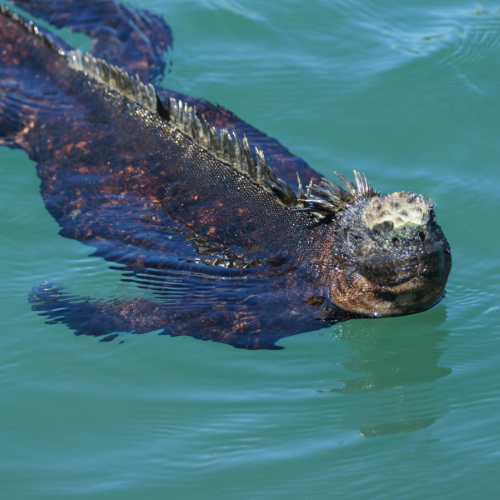
Marine Iguanas are remarkable creatures found only in the Galápagos Islands. They are the world’s only lizard capable of living and foraging in the sea. On land, these iguanas appear clumsy, but in the water, they are agile and powerful swimmers. They feed primarily on algae, which they scrape from rocks beneath the waves. Because their diet contains large amounts of salt, Marine Iguanas have a special adaptation. They filter excess salt from their blood through glands near the nose and expel it by sneezing.
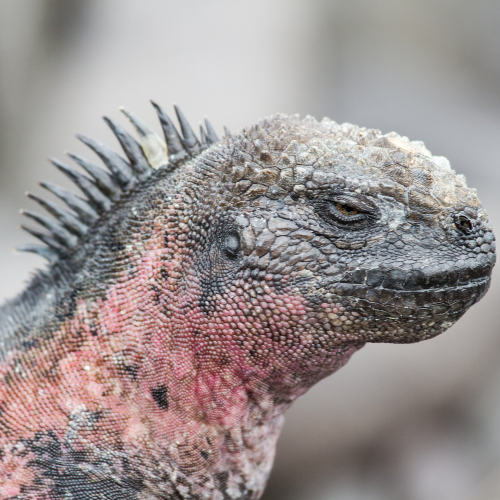
There are 11 recognised subspecies of Marine Iguanas, each inhabiting different islands across the Galápagos. For most of the year, adults are black, but during the breeding season males transform in colour, with each subspecies adopting its own unique colouration.
As reptiles, they rely on external heat sources to regulate their body temperature. In the mornings, they can often be seen basking on sun-warmed rocks, absorbing heat through their dark scales until they have enough energy to swim and forage.
Taxonomy
Scientific Name: Amblyrhynchus cristatus
Kingdom: Animalia
Phylum: Chordata
Order: Squamata
Family: Iguanidae
Marine Iguana Fact File
 Size: Their average size is 0.7 metres, with a maximum size of 1.5 metres, and they generally weigh around 1.5 kg
Distribution: Endemic to the Galápagos Islands
Diet: Algae
Behaviour: Not truly social, but often seen in groups, especially on cold nights, when huddling helps conserve heat
IUCN Status: Vulnerable