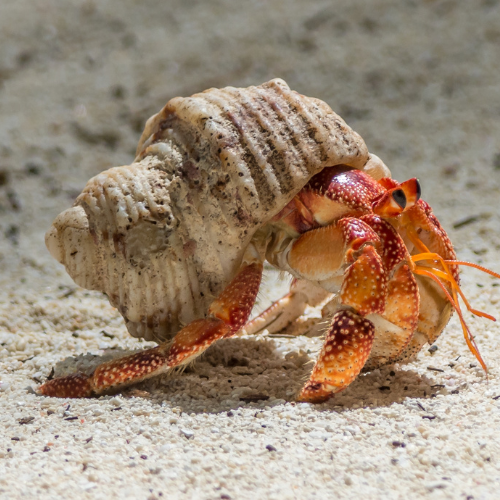
Creature Feature – Hermit Crab
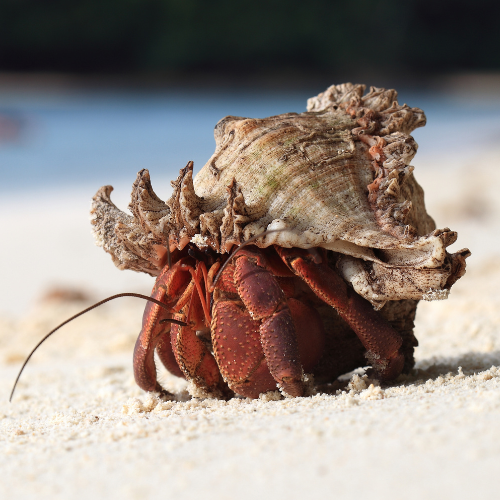
Although hermit crabs are crustaceans, they lack a hard carapace or shell of their own. Instead, they inhabit empty seashells, using them as portable shelters to protect their soft, vulnerable abdomens. These fascinating creatures are commonly found in tide-controlled rock pools, where they scuttle about in search of food and new homes. There are many species of hermit crabs, each adapted to a range of environments across the globe.
Did you know? When a hermit crab outgrows its shell, it must find a larger one to move into. Competition can be fierce, with crabs often battling over the best shells – most of which once belonged to dead snails.
Sadly, ocean pollution is changing this natural behaviour. Around the world, hermit crabs are increasingly forced to use plastic debris and other waste as makeshift shells. A stark reminder of the growing threats to marine ecosystems.
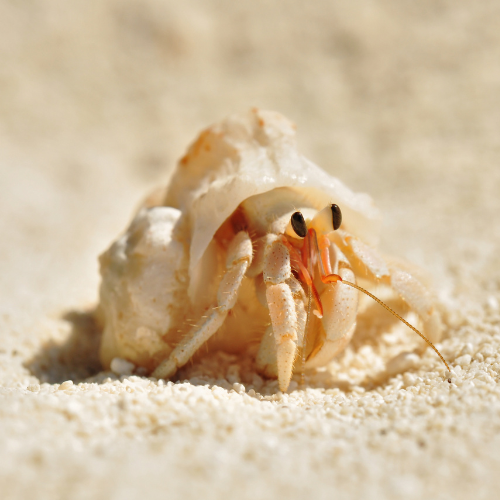
Taxonomy
Scientific Name: Eschrichtius robustus
Kingdom: Animalia
Phylum: Anthropoda
Order: Decapoda
Super Family: Paguroidea
Hermit Crab Fact File
 Size: Typically, 1–4 cm in length
Distribution: Found worldwide in diverse habitats
Diet: Scavengers, feeding on plant material and dead matter
Behaviour: Their shells often host acorn barnacles or algae, and they form symbiotic partnerships with sea anemones. The anemones’ stinging tentacles deter predators, while the anemones feed on scraps left by the crab
IUCN Status: Not currently threatened